 Our Photo
& Picture Gallery
Our Photo
& Picture Gallery
 Good
photos of Swifts have until now been rare. But recent activities in
Swift study, especially by people with DIY colonies, combined with the
advent of the digital camera, have produced some great pictures. Here
are a few to whet your appetite! They show the amazing, daring, skilful
and exciting nature of these birds, as well as their overpowering charm.
Good
photos of Swifts have until now been rare. But recent activities in
Swift study, especially by people with DIY colonies, combined with the
advent of the digital camera, have produced some great pictures. Here
are a few to whet your appetite! They show the amazing, daring, skilful
and exciting nature of these birds, as well as their overpowering charm.
Need photos of Swifts for environmental purposes? We may be able to help: click here to e-mail Swift
Conservation
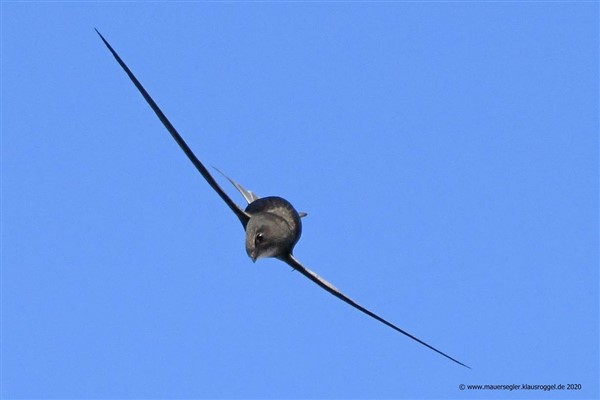 |
An
amazing photograph of a Swift actually upside down in flight,
taken in June 2020 by Klaus Roggel in Berlin. Klaus tells us that: "On
the 3rd of June I managed to get a shot that shows a Swift in "reverse
flight". Exceptionally, it's eyes are not parallel with the horizon in
turning flight as is usually the case. You can always see how acrobatic the flight manoeuvres of the Swifts look, it is just so difficult to capture these moments with the camera. I was lucky and chance came to my side". It looks as though the Swift's thorax and wings are upside down, while the abdomen and tail are the right way up, and the head is on its side, looking down to the left. And it is doing all that while flying and turning at high speed, imposing great stresses onto all of its body and wings. What incredible birds they are! Photo © www.mauersegler.klausroggel.de 2020 |
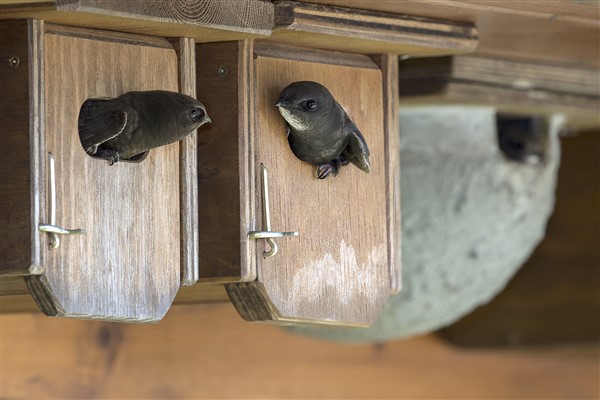 |
A
fine photograph of Swifts in their nestboxes at Alain Georgy's home
Swift colony near La Chaux de Fonds in the Jura region of Switzerland. Alain has been making the very higest quality nestboxes for both Swifts and House Martins for many years now. He has equipped large colonies not only at his own home, but also at numerous buildings in the area where he lives, such as barns, a sawmill, a disused electricity substation, farm buidings and a special House Martin and Bat tower too. The photo shows Swifts in two of his distinctive nestboxes, together with behind them, a Swift using an enlarged type of House Martin nest box, something Alain invented and which they have taken to very happily indeed. Photo © Alain Georgy |
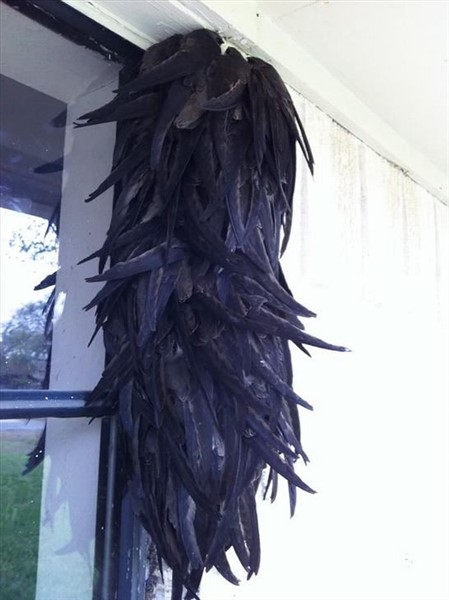 |
This
photograph shows a rare but spectacular phenomenon, "huddling" Swifts.
When Swifts on migration get caught out by cold and / or wet weather,
with no nest places to shelter in, and no flying insects to eat, they
may cling to any structure to rest and try to get out of the cold and
wet. Sometimes they do this alone, sometimes in large numbers, such as here on this window frame, where possibly as many as a hundred Swifts are clinging together, to try and keep warm. Often they fail, and are found dead on the ground the next day having perished from starvation and hypothermia. Indeed, it is thought that most Swift mortality comes from starvation and dehydration. We were sent this photo by someone who did not know who took it. We thought it valuable to show for educational purposes. If you took the photo, or know who did, please let us know as we are keen to credit and thank them. |
|
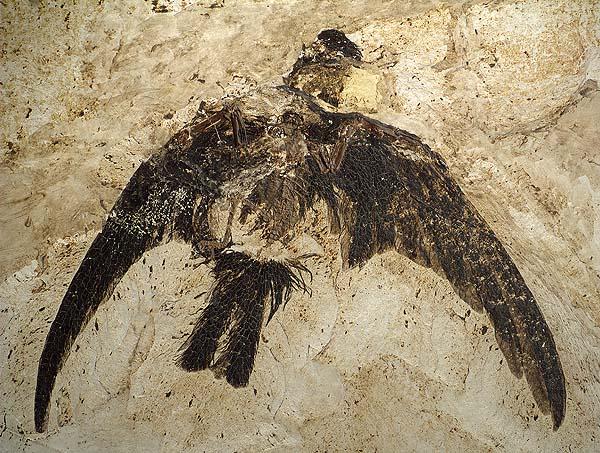
The "Scanish Swift", a fossil Swift from 49 million years ago and the oldest known Swift. (Scaniacypselus szarskii; Apodidae; Mayr & Peters 1999) This species measured about 80mm from head to tail, and had a wingspan of about 200mm, rather smaller than our modern Swift. It flew and hunted insects over the shallow tropical seas and marshlands in the area that is now Hesse in Germany. It died in flight, falling into the sea, and was preserved in the oil shales of the Grube Messel. You
can see this superb fossil in the Senckenberg Museum
in Frankfurt. Click
here
to see their web site and find out more. |
|
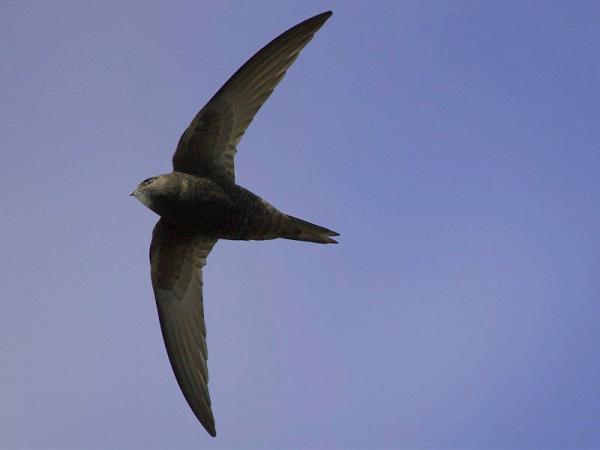
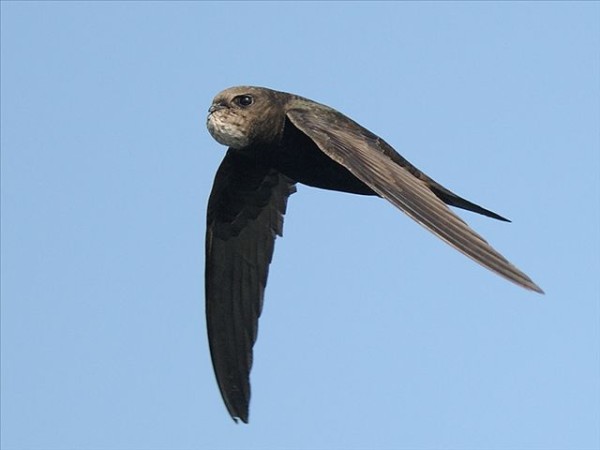
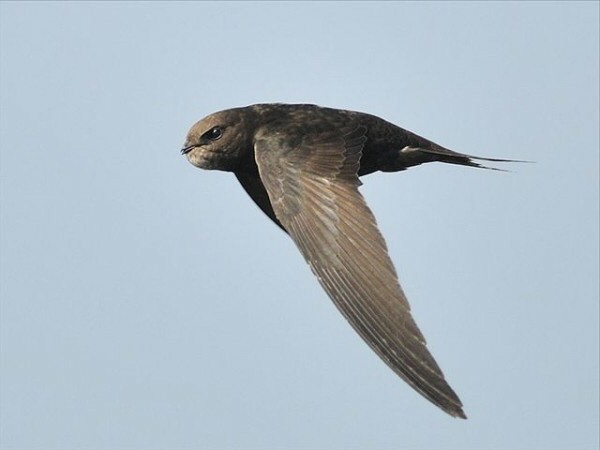
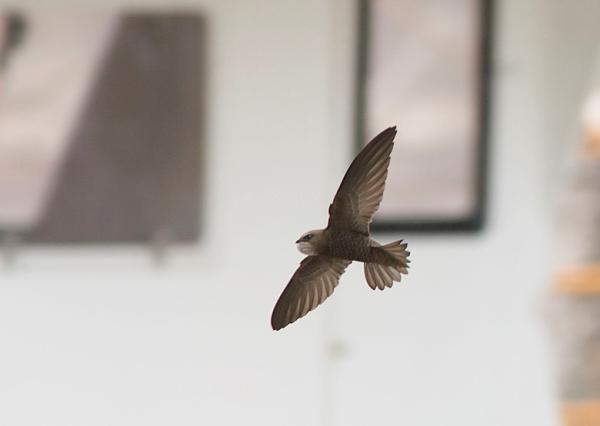
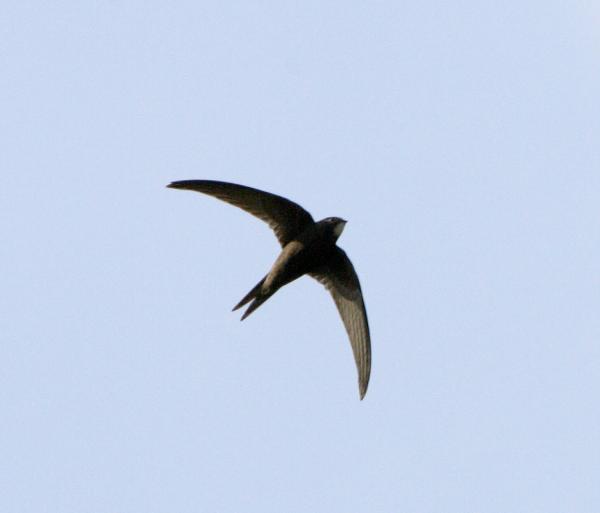
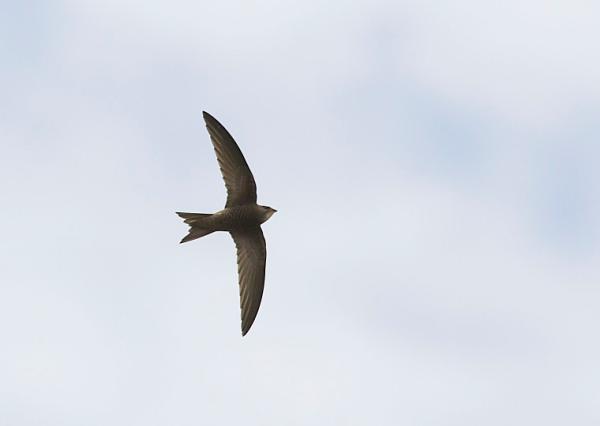
This excellent photo shows an adult Swift in level flight. |
|
|
A pair of Alpine Swifts, Apus
melba, migrating over the dusty hills outside
Tarifa in Andalusia, Southern Spain, heading for
Morrocco in Autumn 2014. |
|
|
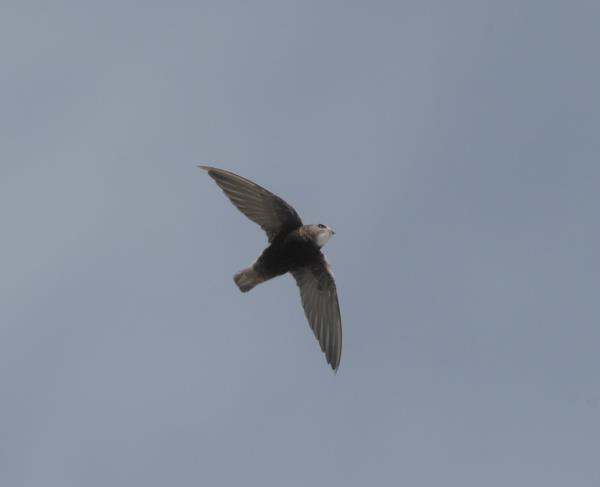
This Little Swift, seen
over Andalusia in southern Spain, is just about
a European Species, with a few breeding outposts
in Southern Spain, but otherwise a sub-Mediterranean Old
World bird with a patchy range that takes it from
Africa right across to India and southern China.
It is everywhere rather dependent on urban
areas for nest sites, and at its most abundant in
sub-Saharan Africa and India, where it is a
common bird. |
|
|
Nothing
flies like a Swift! Speed, aerobatics, drama, social
interaction, hunting activity, flying for the joy
of it, that is what Swifts do, and what makes
them so magical. |
|
|
Look
at this one! The Swift is vertical in the air, on
its side, and its head is perfectly level with the
ground. |
|
|
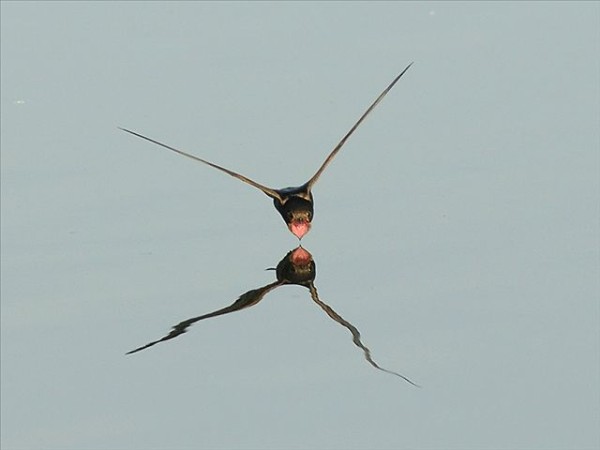
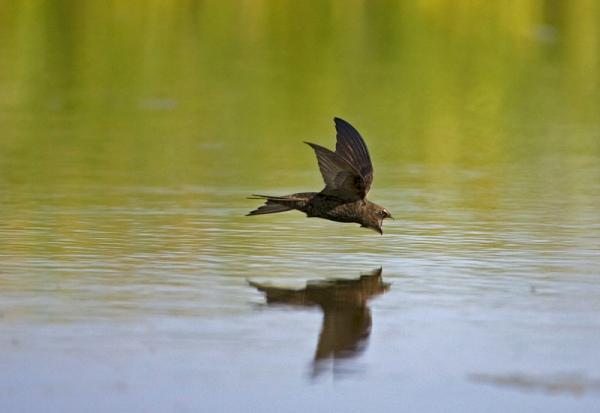
They don't get
more dramatic than this! A fantastic photo of a
Swift skimming a dead calm water surface and just about to drink. Try flying like this
and not getting wet...... you would be very hard
put to do it! |
|
|
Returning to feed its chicks
with its throat stuffed with food, this excellent
photo shows how Swifts carry a "food ball" made up of hundreds of
small flying insects. |
|
|
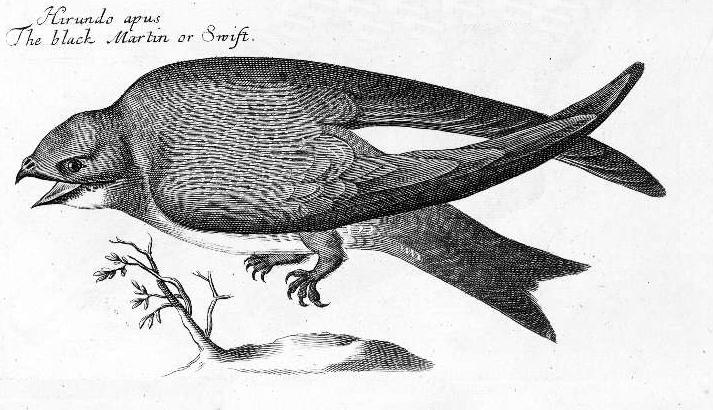
One of the first,
if not the first, accurate illustrations of a Swift,
prepared at the behest of the pioneering naturalist
Francis Willoughby, 1676. |
|
|
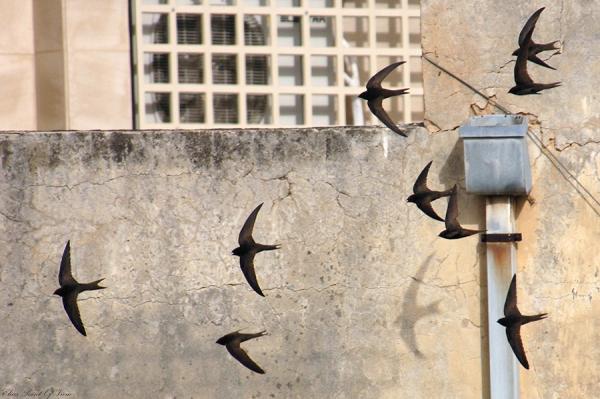
A
flock of screaming Swifts dashes past a wall in
Israel, marking their territory and strengthening
their bonds with their partners nesting in crevices
near by. In the Middle East Swifts start to arrive
and nest in February, and are gone by the end of
June. This early nesting period coincides with insect
availability and also with a cooler period; the
extreme heat of the summer would make nest places
too hot, cooking the eggs and killing the
chicks. |
|
|
This photo
shows an adult Swift in a typical, yet now fast-vanishing
nest place, the open eaves of an old building. |
|
|
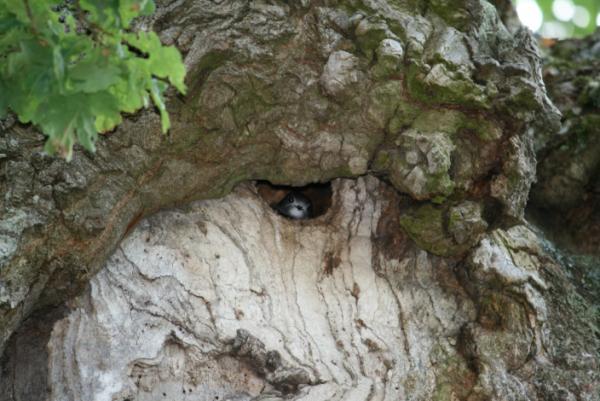
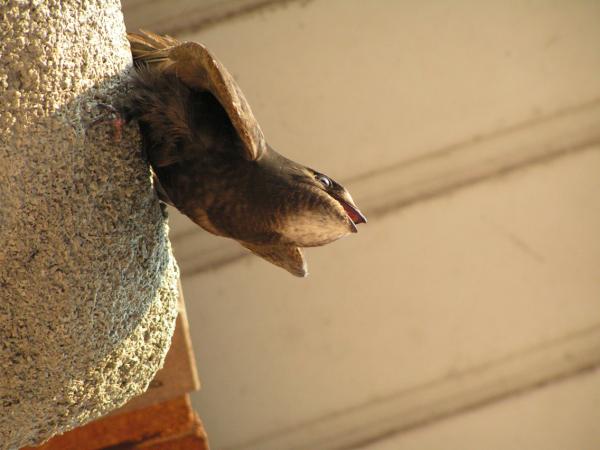
An
immature Swift peeks out from its nest hole in a
tree. Note the very pale face, typical of juveniles. Photo © Olle Tenow |
|
|
Journey
to the Centre of the Earth! |
|
|
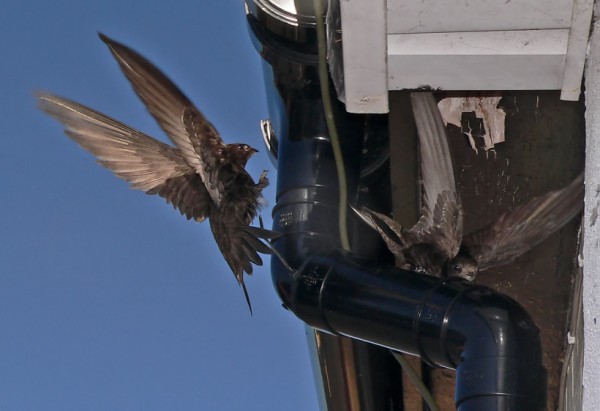
Swifts
nesting in a hole behind drainpipes in a suburban house. These
types of nest places are often stopped up during
renovation or redecoration work, and the Swifts
as a result lose their nestplaces for good. It is
this sort of well-meant but uninformed repair work
that is costing so many Swifts their nestplaces,
and even sometimes their lives as the chicks become
trapped in the nest holes and die. |
|
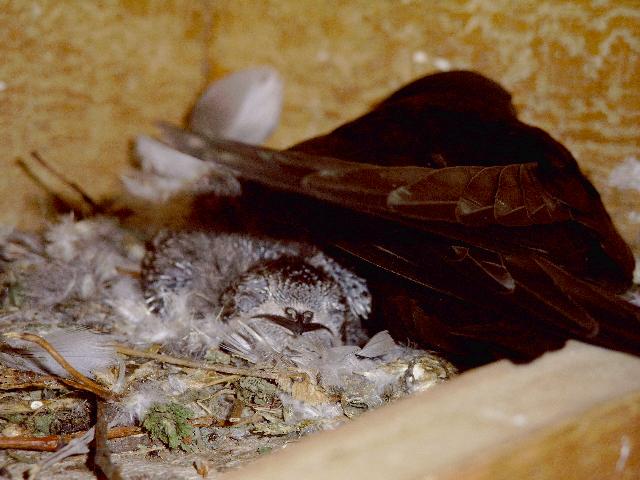
A new Swift chick sleeps beside its parent. If it survives, this will be the longest period of rest it ever knows. Most of the rest of its life will be spent on the wing. If lucky, it may live for 10 years, and in that time it will fly 20 times to and back from Southern Africa. The nest is basic, made from airborne debris, feathers, moss and saliva. Sometimes Swifts don't make a nest at all. They just lay the eggs on the bare surface. Swifts usually raise no more than 2 chicks, with a family of just
one being quite common. |
|
|
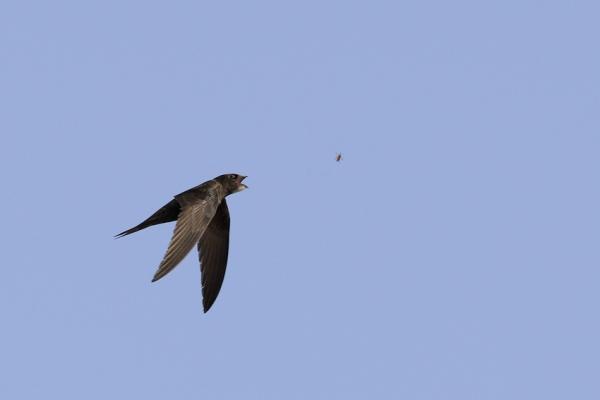
In
this spectacular image, Amir Ben Dov has captured
the moment when a Swift lines up with its target
snack, a large flying insect. It is thought they can tell the difference by the sound each creature makes when it flies. Photo © Amir Ben Dov |
|
|
|
|
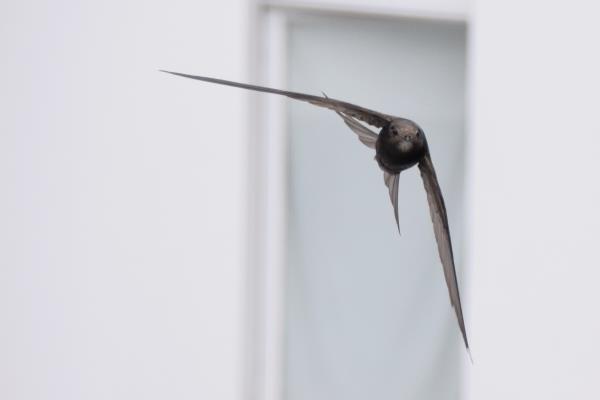
A
Swift
displays its agility, immensely long wings
and also its pale chin (rarely visible from the
ground) as it flies up to its nest place in a building. |
|
|
This
young Swift was found exhausted and unable to fly
on Guernsey one summer. It was rescued by Margers
Martinsons and Nick Winship, nursed back to health by
the staff of the Guernsey Animal Shelter and released
to fly
off to Africa. |
|
|
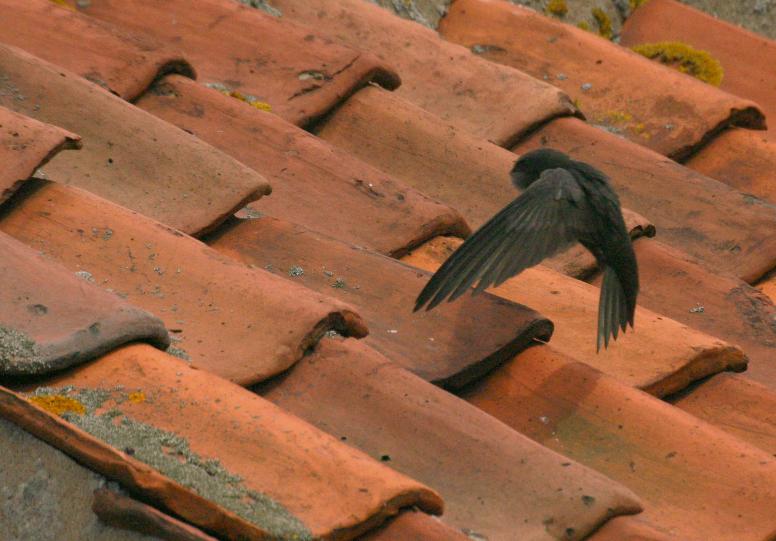
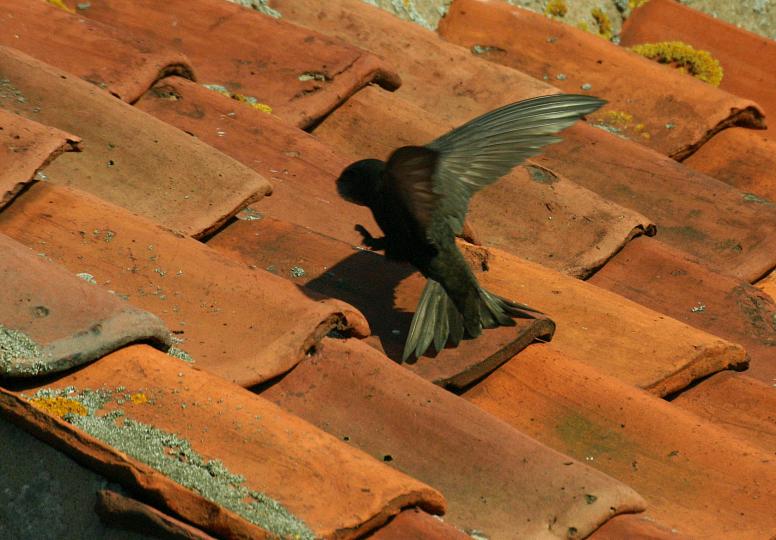
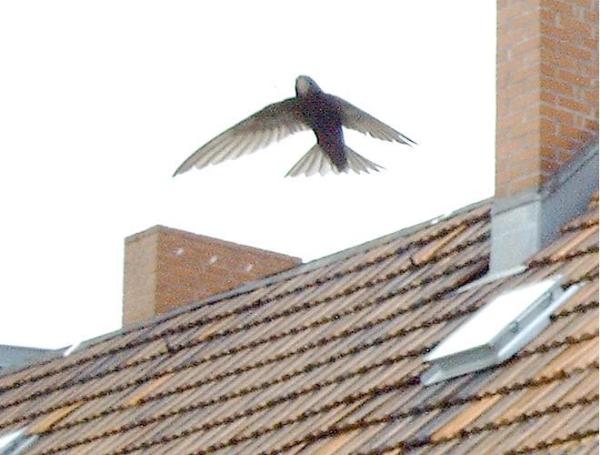
Swifts can often find places to nest under ill-fitting pantiles on old roofs. These two photographs, taken near Lincoln, show a Swift, its throat bloated with insect food collected in the air for its chicks, returning to its nest place beneath the tiles. See how the Swift is using its entire body as an air-brake to stop its forward movement. It will have approached the nest at speed, and must decelerate rapidly to land safely. The body is held almost vertical, and the wings and tail are spread out to present as big an obstacle to the air as possible. New
or renovated pantile roofs are easily adapted to
let Swifts nest in them, without any fuss or mess.
See our Nest
Places in Pantile Roofs
page for more photos and details. |
|
|
This next photo shows the Swift landing. Forward movement is limited to settling on its outspread feet, as the tail is actually in contact with the tiles and will be slowing forward movement to nil. The Swift will now scuttle on its very short legs beneath the tiles to feed its young, then emerge very rapidly to take off and fetch more food. It
will continue to do this in a series of shuttle
flights for the 40 or so days it will take to rear
its chicks to the stage where they are perfectly
feathered, and can fly off straight to Southern
Africa for their first Winter. |
|
|
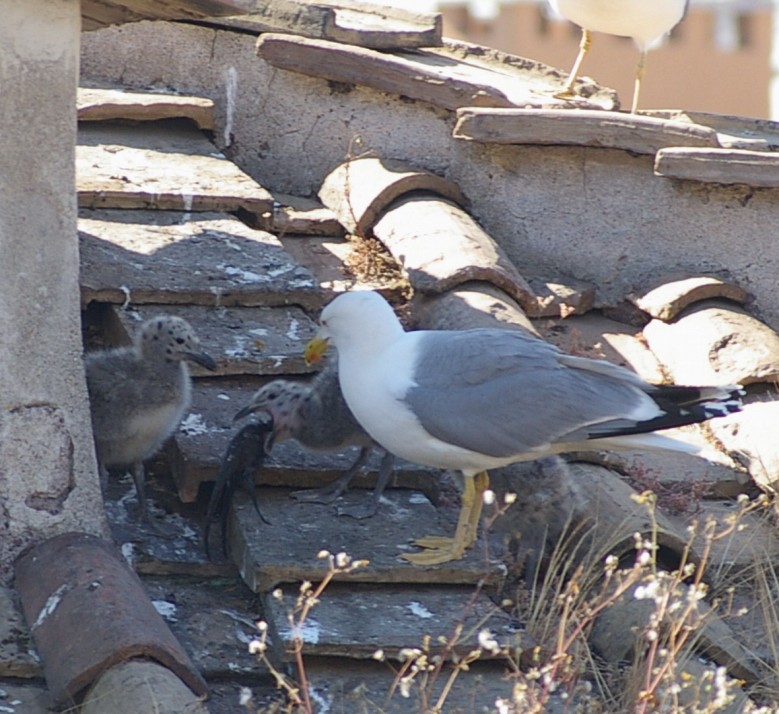
A
Swift meets its end as a meal for a young Yellow-legged Gull, on a
rooftop in Rome. Swifts have been nesting in Rome for maybe 2500 years.
The patterns of the tiles haven't changed since the days of the Romans;
they are perfect for Swifts to breed and roost under. Photo © Gerry Firth |
|
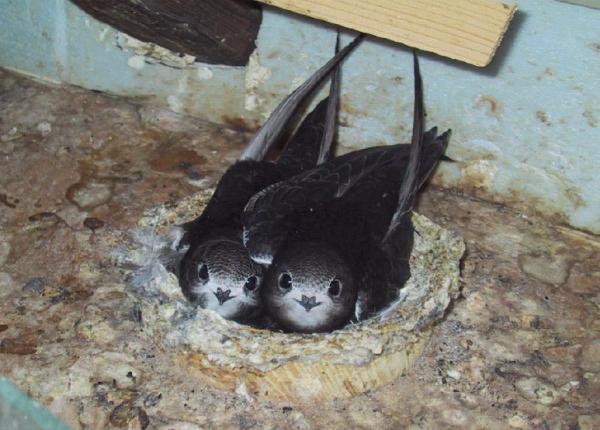
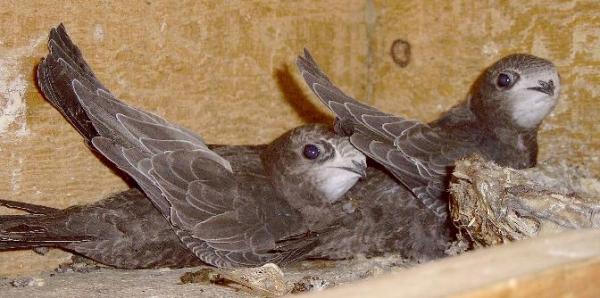
Two juvenile Swifts sit in their nest, almost ready to fly to Africa for the winter. Note the thin nest-lining of saliva and a few feathers (caught in flight) that make the man-made nest cup comfortable. Juvenile Swifts, like these, have a pale edge to the feathers of the head and wings, that wears away as they mature. Adults are all-dark, with a pale chin patch, difficult to see except in bright sunlight; they are much darker than the juveniles. Swifts can continue to use the same nest space for many years
precisely because, unlike other birds, they do not fill it up with
debris. |
|
|
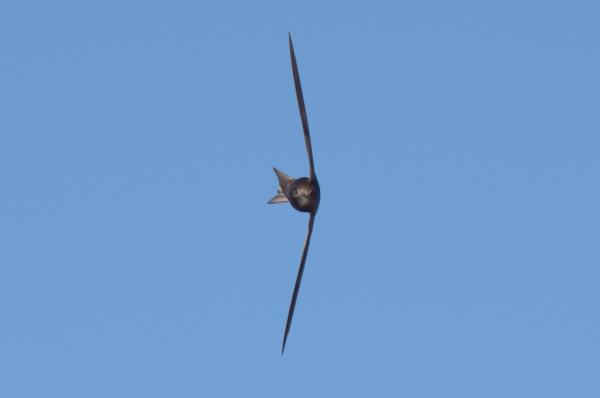
This
photo shows fascinating details of the Swift's aerodynamic
features. Note the alulae or "bastard wings"
sticking up from the normal wing surface about a
quarter way out from the body. These are fully controllable
by the bird, corresponding to the "slots"
used on aircraft, and give increased lift and manoeuvrability
at low speeds. The tail is here dipped to the bird's
right, showing how it is steering through the air,
a bit like the rudder on a boat. |
|
|
An
amazingly dramatic photo of an enraged Swift driving
off a rival from his nest space after a bitter fight.
Swifts will compete and contest for nest spaces,
the more so if there is a shortage of them. Fights
can last for hours, the combatants lying gripped
and struggling in each others' claws, until one
gives up and succeeds in getting away. |
|
|
A
handsome photo of a Swift in flight, giving good
views of its underside and especially its chin and
tail. You can see the pale throat, often impossible
to see in normal light, and also the sculptured
effect of the tail and body boundary. |
|
|
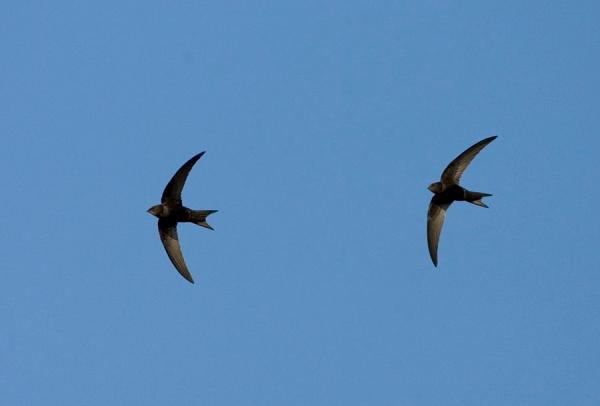
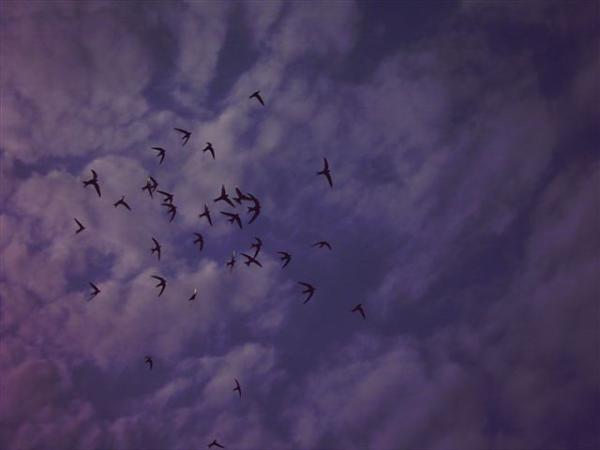
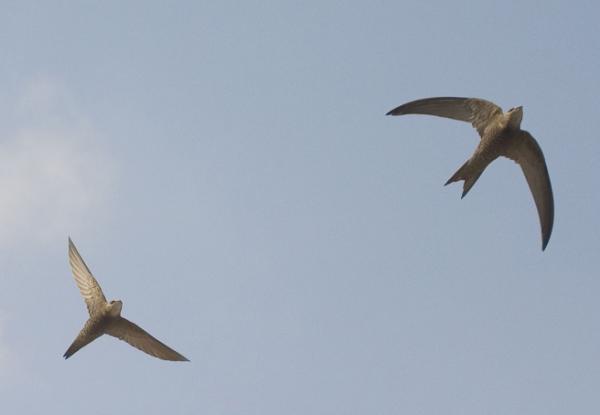
Two
Swifts in flight - a more exhilarating and satisfying
sight is hard to imagine. The sheer beauty, skill,
daring and vigour of these birds as they dash across
the sky is just amazing. |
|
|
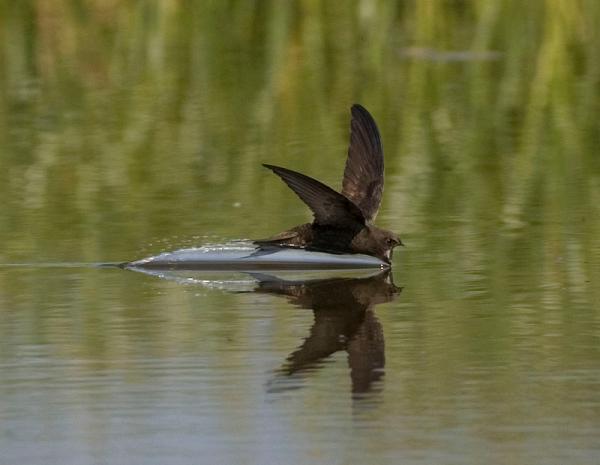
Swifts
have to drink, and they have to do it in flight
as they cannot land on the ground, unlike the Swallows
and Martins who can drink at the water's edge if
they need to. |
|
|
Contact!
The Swift is scooping up water at high speed, leaving
a white-water wake where its lower bill has cut
the surface. |
|
This fascinating photo shows a Pallid Swift ( a very similar species that breeds mostly around the Mediterranean) with a ball of captured insects in its throat; note the bulge. Swifts catch insects by pursuing and snatching, and when in swarms of small insects, by just scooping them up, like Basking Sharks catching plankton. The compressed insects are then carried to the nest and fed to the chicks. Swifts will travel immense distances to find food for their chicks.
Several years ago, when bad summer weather diminished insects
in Sweden, Swifts there moved en masse to Bavaria to gather
food. To cope with this, Swift chicks can endure several days without food by initiating a
torpid state where their body temperature and activity fall to
minimal levels. |
|
A sight that is getting rarer every year as rebuilding and refurbishment remove ever more nest places. A flock of Swifts renews its social and territorial links, in fast screaming flight above their nesting territory. Note the amazing flexibility of their wings. This gives them supreme control of the air, enabling Swifts to fly like no other bird, much faster, with greater agility and grace. Swifts display a variety of social flights, from low level screaming flight of the birds nesting in just one or two streets, to big late-summer get-togethers of the year-old non breeders from several colonies. These are flown at much higher levels at dusk, when they ascend to the heavens to sleep on the wing. Swifts sleep in flight with their senses of place, windspeed and
direction alert. Gliding on the breeze, they compensate for wind
drift and change of direction to stay in place above their home
territory. At dawn they descend rapidly back to lower levels, to fly
and feed around their familiar territory. |
|
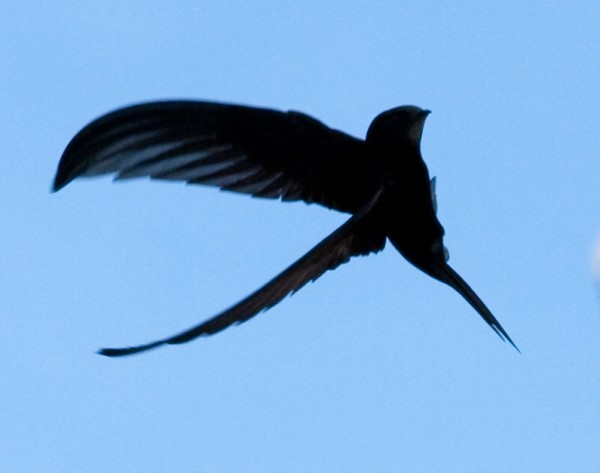
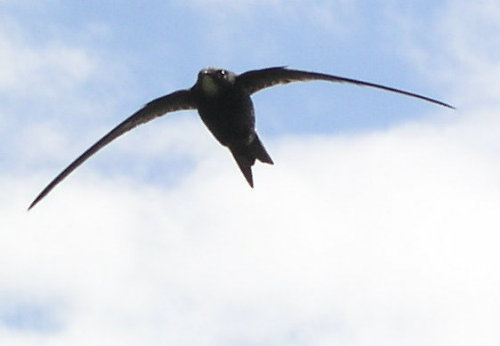
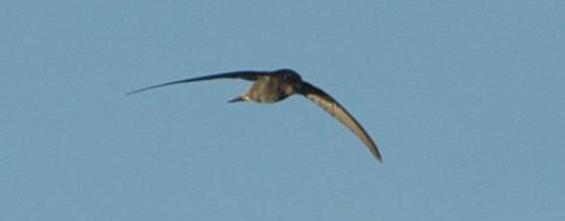
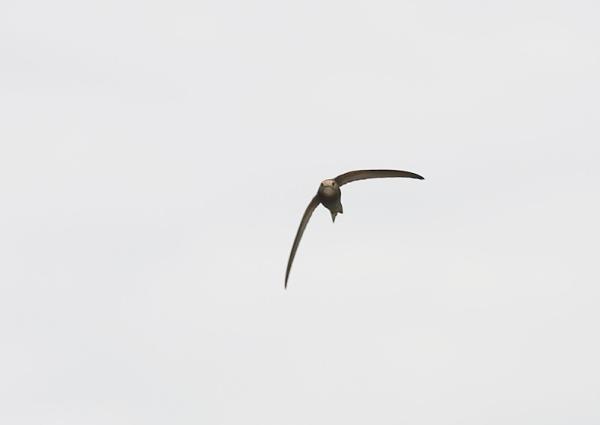
A fine study of a Swift in flight. The forked tail is
rather
different from those of the Swallows and Martins with which the Swift,
while no relative, is often confused. |
|
Two alert young Swifts sit in their man-made nest box. |
|
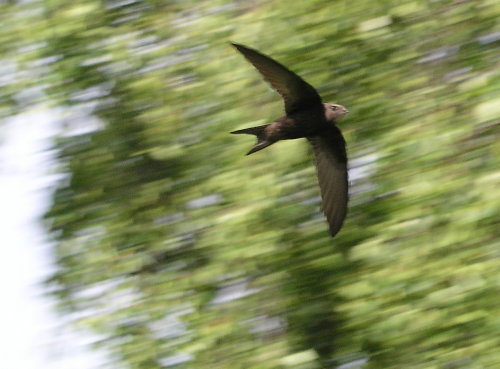
Coming in low and fast, a feeding Swift chases invisible insects
during 2004's plethora of huge aphid swarms. |
|
|
|
|
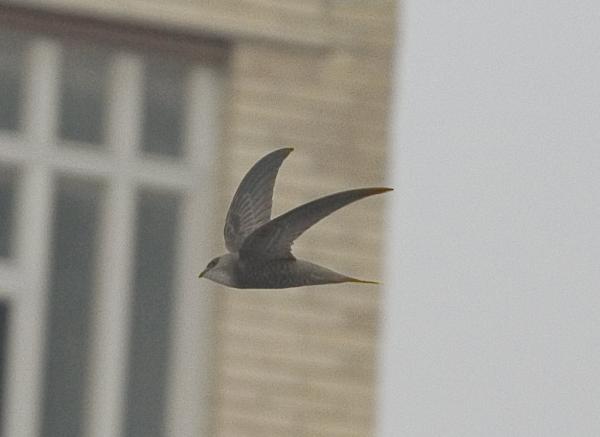
Coming
in fast! A Pallid Swift does a rapid turn in the
air over Tarifa, Southern Spain. See how the tail
is dipped to act like a rudder, cutting the air
and forcing the bird into a turn. One wing is dipped
so the bird can pivot on it, while the
extended flat wing provides the lift that keeps
the bird in the air. The faster the bird flies,
the "tougher" the air will become, behaving
much like a liquid at the highest speeds. |
|
|
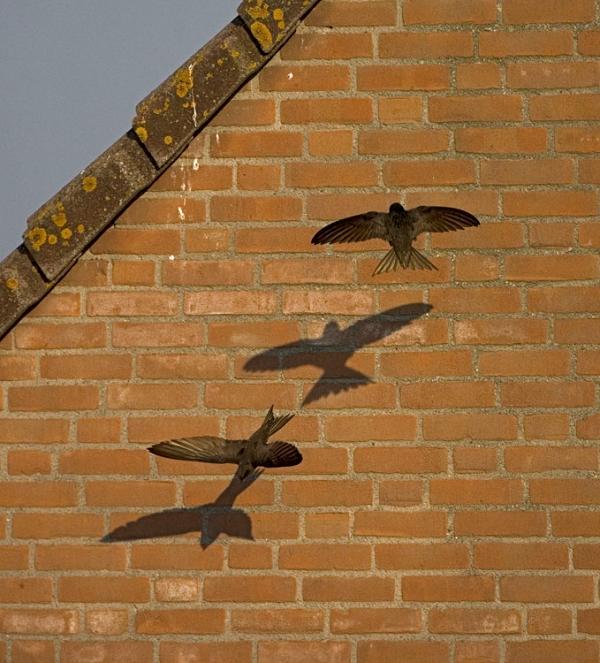
A
common but often overlooked habit of Swifts is to
fly up a building's walls to have a look for suitable
nest places, or, having established a nest, to visit
the nestplace to feed the chicks. |
|
|
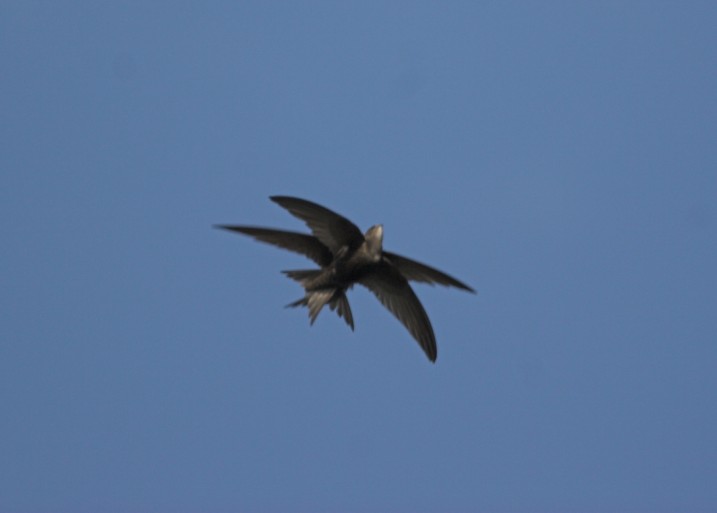
Swifts mate in the air, or on the nest. Here you can see a spectacular coupling in flight. They are perhaps the only birds that do this, evidence of their amazing flying skills and their completely airborne life style. For Swifts, not flying is to be in danger, the air is the safest place they can be. This behaviour is easy enough to see, if you watch Swifts carefully on their high-in-the-sky flights early on in May and June. But the whole act takes only a second or two, so you have to be sharp eyed and sharp witted to witness it! Photo © Graham Catley |
|
This superb photo shows a pair of Pallid Swifts, the
lighter-coloured southern Swift species. They breed on the
Western Mediterranean littoral and along the Persian Gulf, and occasionally
turn up in the UK. Because of this they can spend longer in the breeding areas,
(from April to November in Southern France), and can raise two
broods. They like
rocky gorges and cliff faces as nest sites, preferring coastal or river valley
sites. |
|
A stunning study of a Pallid Swift, flying through a
town on the Persian Gulf. The lighter colour
of the bird, so evident here, is best seen in brilliant sunlight. |
|
|
Another fine photo of a Pallid Swift, seen here over Tarifa in Southern Spain. There are some slight visual differences apparent here differentiating it from the Common Swift. The bird appears broader winged and more plump. More
reliable clues are the paler
colour, (seen best in very bright sunlight or from
above) and the slightly deeper tone of their calls. |
|
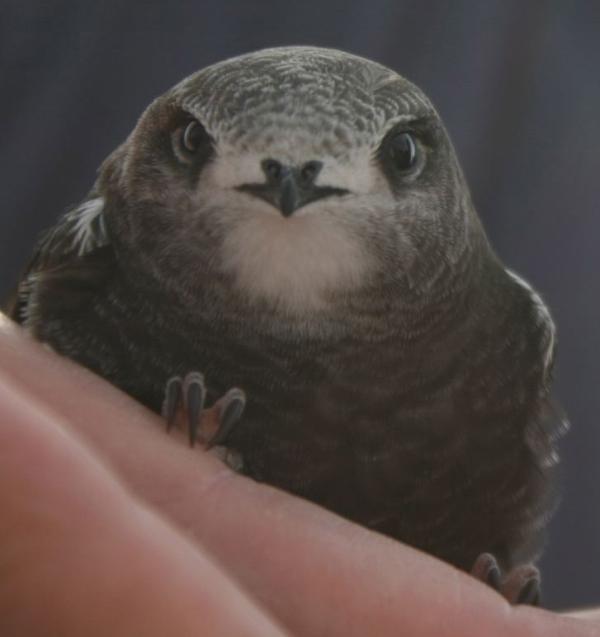
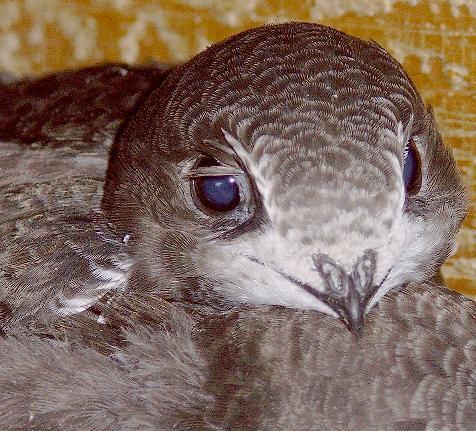
This close up of a young Swift's head, several times larger than
life size, shows the unique scale-like feathering, and the
streamlined shape, supporting high-speed flight. |


 Next - Swift First Aid and Carers
  Back to Contents